
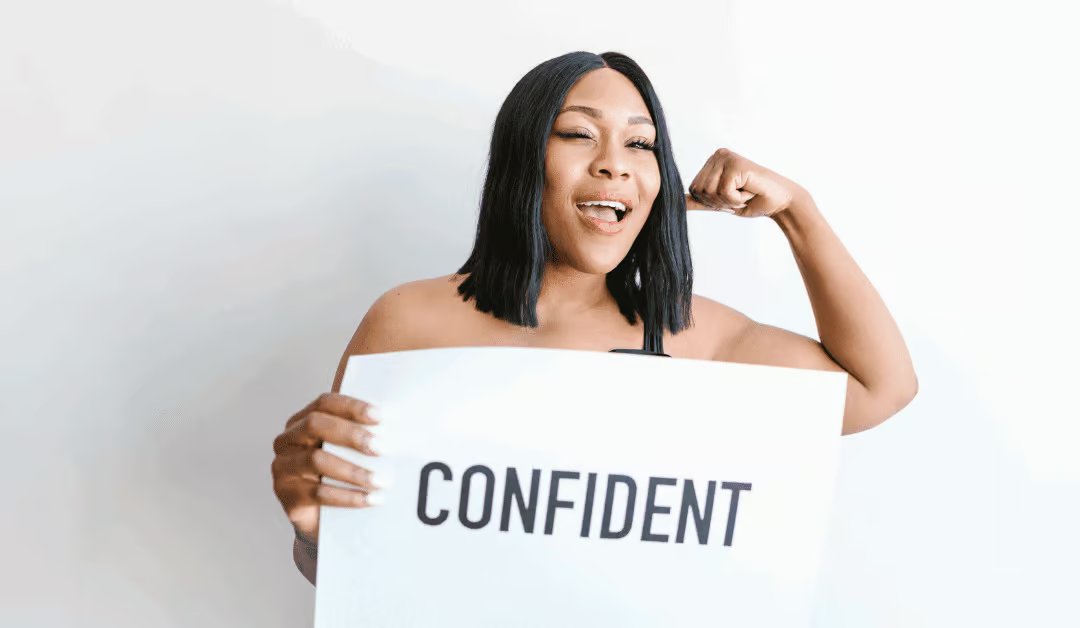
There was a version of me who knew how to read the room but not how to speak in it.
Who stayed quiet even when the words were there, sitting heavy in my chest.
Who made herself small so others wouldn’t feel uncomfortable.
I didn’t always recognize it as fear. I called it professionalism. Respect. Knowing my place.
But deep down, I was just trying to stay safe.
And honestly, it worked for a while.
Until it didn’t.
Until I realized that silencing myself wasn’t peace. It was erasure.
And that’s when I began to reclaim something I never really lost confidence and self-expression.
Confidence Isn’t Always Loud. Sometimes, It’s a Return
We tend to picture confidence as bold and polished. Head high, voice steady, answers ready.
But real confidence doesn’t always look like that. Sometimes, it looks like simply choosing not to abandon yourself.
For many high-achieving Black professionals, confidence isn’t about standing tall in the spotlight. It’s about reclaiming the right to feel, speak, and take up space in rooms that taught us to shrink.
That kind of confidence isn’t a show. It’s a return.
A return to your full voice. Your full presence. Your full self.
And self-expression? That’s how confidence breathes.
Not just in what you say but in how you move, dress, pause, or advocate for your needs.
You Don’t Have to Yell to Be Clear
Confidence can be quiet. In fact, some of the boldest acts of self-expression come in small, deliberate moments.
It looks like:
- Saying, “Actually, that doesn’t work for me” without overexplaining.
- Wearing your hair the way you want, not the way the dress code implies.
- Speaking up in a meeting, even if your voice shakes a little.
- Letting yourself be visible when you’re used to blending in.
These aren’t grand gestures. But if you’ve been taught to stay quiet, they’re powerful.
Every time you choose yourself in these moments, you build a stronger foundation of trust with the one person who needs it most—you.

How to Practice Confidence and Self-Expression
Let’s be real. You won’t wake up one day and suddenly feel bold, assertive, and invincible. Confidence is built in motion. You don’t wait for it. You walk with it until it catches up.
Here are a few ways to begin:
- Start where you are. Say what you’re thinking to yourself first. Then try it out with someone you trust. Practice being honest—even if it’s messy.
- Set boundaries without backpedaling. “No” is a full sentence, but it takes practice. The more you use it, the less guilt shows up with it.
- Get curious about your silence. Ask yourself: “What part of me is afraid to speak up here?” Then honor what that part has been protecting.
- Do something expressive on purpose. Write. Dress how you want. Try saying what you really mean in an email. Each of these is an act of reclamation. Color in your favorite Shades of Emotion book
The goal isn’t to become someone else. It’s to become more fully yourself.
Reflection Questions:
Take a few quiet moments to check in with yourself. These aren’t about fixing anything—just getting curious about what’s been true for you, and what could shift.
When did I first learn that silence was safer than honesty?
Think back to early experiences—home, school, work where speaking up came with consequences or discomfort.
Where in my life do I still filter myself to keep the peace?
Notice if certain relationships or environments still trigger that urge to shrink, edit, or perform.
What would it look like to express myself without performing?
Picture yourself showing up without the armor. What would feel different? What would feel more honest?

Pull It All Together
Confidence and self-expression aren’t traits. They’re choices.
You don’t have to be loud to be clear. You don’t need to be perfect to be worthy.
You just need to show up to yourself, for yourself.
If you’re just beginning to reclaim your voice, know this: the version of you who stayed quiet was doing their best.
They made it possible for you to be here now.
But now that you’re here, maybe it’s time to speak.
Even if your voice trembles.
Even if it surprises people.
Even if it’s not fully polished yet.
You don’t owe the world perfection.
You owe yourself the chance to be fully seen.
Ready to explore what your scrolling might be protecting you from?
If you’re ready to speak without shrinking and express yourself without apology, we’re here to help.
At Simplicity Psychotherapy, we offer:
- Individual therapy for high-achieving professionals navigating people-pleasing, perfectionism, and emotional suppression
- EMDR therapy to address the past experiences that taught you silence was safer than self-expression
Your voice deserves space. Let’s help you find it.
Start your therapy journey today.

About the Author
Hi, I’m Rayvéne Whatley, a Licensed Professional Counselor practicing in Georgia, Louisiana, and Texas. I’m passionate about empowering people, especially Black men and women, to remove the mask of other people’s expectations and step into their authentic selves.
Much of my work focuses on addressing the impact of racial trauma on mental health. The intersection of identity, systemic stressors, and societal expectations can create layers of anxiety, self-doubt, and emotional pain. I help clients navigate these experiences by reexamining beliefs that no longer align with their goals and replacing them with ones that support their desires and values.
Through my writing, I aim to share insights and resources to help you better understand the connection between racial trauma and mental well-being, while offering tools to reclaim your peace and balance.
Whether you’re here for guidance, validation, or inspiration, I’m glad you’ve found this space.Healing isn’t always easy, but it’s worth it—and you don’t have to do it alone.
