

Lately, more and more clients have been coming into therapy with the same question:
“Could I have ADHD and not know it?”
They’re not talking about what we were taught ADHD “looks like”—the kid who can’t sit still, who blurts things out in class, who’s always in trouble for not paying attention.
They’re talking about a different kind of ADHD. One that flies under the radar because, on the outside, they’re doing just fine. Degrees? Check. Career? Thriving. Keeping everything organized and on schedule? That’s where things get messy.
For high-achieving, high-functioning individuals, ADHD often hides behind perfectionism, productivity, and people-pleasing. And for women especially, the signs are frequently overlooked, misdiagnosed, or dismissed as “just stress.”
Let’s talk about what high-functioning ADHD can really look like and why so many people are just now starting to connect the dots.
When ADHD Doesn’t Look Like What You Expect
ADHD is often associated with hyperactivity and impulsivity, especially in boys. But when it comes to adults,particularly high-functioning adult, it can present differently. Many are underdiagnosed because they’ve found creative ways to cope or mask the symptoms. The result? A lifetime of working twice as hard just to stay afloat and never knowing why it felt so hard.
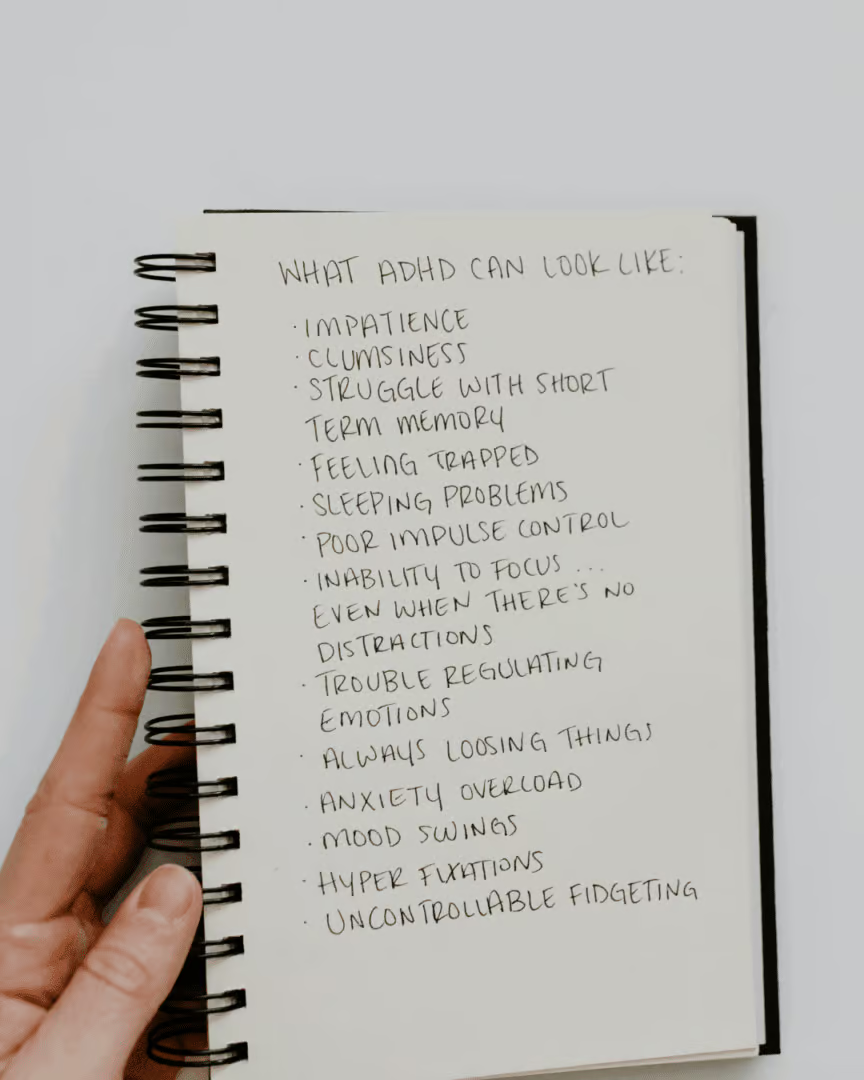
Here’s what high-functioning ADHD might look like:
-
You can hyper-focus on things you love… but forget to pay your phone bill for weeks
-
You write endless to-do lists but rarely follow them
-
You’re always busy, always doing… but somehow always behind
-
You procrastinate not because you’re lazy, but because the task feels overwhelming to start
-
Your brain feels like a browser with 87 tabs open and at least 5 are playing music you can’t find
-
You’re emotionally reactive or sensitive to rejection, even if you don’t show it
These symptoms can be chalked up to “just being tired,” “having too much on your plate,” or “being a perfectionist.” But sometimes, there’s something deeper going on and recognizing it can bring an enormous sense of relief.
The Social Media Factor: Awareness or Over-Identification?
Let’s talk about TikTok, Instagram, and the ADHD-for-you-page.
There’s been a noticeable rise in ADHD-related content online. Creators are sharing everything from “Day in the Life with ADHD” to fast-paced videos breaking down symptoms like time blindness, task paralysis, and object permanence issues. For many people, these posts have felt like a lightbulb moment. “Wait… that’s a thing? That’s not just me?”
Increased awareness is a good thing.
For years, people, especially women and people of color, have been misdiagnosed or completely missed by a system that wasn’t built to recognize how ADHD can actually present. Social media has opened up access to information, helped people feel less alone, and prompted many to seek formal evaluations and support.
But here’s the catch: Not everything that feels relatable is diagnostic.
Many ADHD traits also overlap with trauma responses, anxiety, depression, or the sheer burnout of trying to survive under capitalism. If you’re overwhelmed, forgetful, or easily distracted… it doesn’t necessarily mean you have ADHD. It might mean you’re human and tired.
That’s why self-diagnosis should always be followed with professional guidance, not because your experience isn’t valid, but because you deserve clarity and care tailored to your actual needs.

Gender Differences: ADHD in Women vs. Men
ADHD is often missed in women because it doesn’t always show up the same way it does in men. Historically, diagnostic criteria were based on studies of hyperactive young boys. That means women with ADHD have spent decades slipping through the cracks, often getting labeled as anxious, moody, disorganized, or “too sensitive.”
In men, ADHD tends to show up in more externalized behaviors:
-
Restlessness, impulsivity, and physical hyperactivity
-
More frequent disciplinary or behavioral concerns in childhood
-
Interrupting, risk-taking, or difficulty regulating frustration
In women, the symptoms are more internalized:
-
Chronic overwhelm and burnout
-
Forgetfulness, zoning out, or “daydreaming”
-
People-pleasing to mask executive dysfunction
-
Rejection sensitivity and low self-esteem
-
Anxiety and perfectionism as coping tools
Because girls and women are often socialized to be quiet, helpful, and agreeable, they’re more likely to develop compensatory strategies early on, masking the ADHD traits and blaming themselves for the ongoing stress and mental fatigue.
Why Diagnosis Matters (Even If You’ve Been “Doing Fine”)
Maybe you’ve managed to build a successful career, juggle a family, or lead a busy life. But internally, you’re constantly exhausted from managing your own mind.
A late-in-life ADHD diagnosis isn’t about labeling yourself. It’s about understanding yourself. It gives you language for what you’ve been navigating all along and permission to approach things differently.
It’s not about lowering expectations. It’s about adjusting them to match how your brain works best.
For some, that might mean medication. For others, it might mean therapy, executive functioning coaching, or simply not beating yourself up for being “disorganized.”
Questions to Ask Yourself
If you’re wondering whether you might have ADHD, try asking:
-
Do I struggle with focus even when I care about the task?
-
Am I often late—not because I don’t care, but because I misjudge time?
-
Do I feel like I have to work twice as hard to keep up?
-
Do I frequently lose or misplace things, even when I’m trying to be organized?
-
Am I sensitive to criticism or feel deeply impacted by perceived rejection?
If you see yourself in these questions, you’re not alone—and you’re not making it up.
You Don’t Have to Keep Pushing Through Alone
Whether you have ADHD or not, therapy can help you understand how your mind works—and how to work with it instead of constantly fighting against it. At Simplicity Psychotherapy, we help high-achieving professionals untangle the stress of success, identity, and emotional overwhelm without judgment.
If you’ve been carrying the weight of “keeping it together” while quietly falling apart, let’s talk.
Schedule a consultation today. There’s nothing wrong with how your brain works. But you deserve support in learning how to care for it.

About the Author
Hi, I’m Rayvéne Whatley, a Licensed Professional Counselor practicing in Georgia, Louisiana, and Texas. I’m passionate about empowering people, especially Black men and women, to remove the mask of other people’s expectations and step into their authentic selves.
Much of my work focuses on addressing the impact of racial trauma on mental health. The intersection of identity, systemic stressors, and societal expectations can create layers of anxiety, self-doubt, and emotional pain. I help clients navigate these experiences by reexamining beliefs that no longer align with their goals and replacing them with ones that support their desires and values.
Through my writing, I aim to share insights and resources to help you better understand the connection between racial trauma and mental well-being, while offering tools to reclaim your peace and balance.
Whether you’re here for guidance, validation, or inspiration, I’m glad you’ve found this space.Healing isn’t always easy, but it’s worth it—and you don’t have to do it alone.
